Showing posts with label Piano. Show all posts

Saturday, July 9, 2011

7/9 A Few Remaining Piano Sonatas (No. 15, 22, 25)

Beethoven composes the 14th sonata (www.lvbeethoven.com)
Looking over my "Works Index" there are a few gaps in my list, so I'll try to fill those in the next few days...

Pt 1-3: Piano Sonata #15 In D, Op.28, "Pastoral" (1801) (Sahun Hong)
Pt 4-5: Piano Sonata #22 In F, Op.54 - (1804) (Jan Moeyaert)
Pt 6: Piano Sonata #25 In G, Op.79 (1809) ('Cuckoo') (Matthias Soucek)


Linklist

Piano Sonata No.15 in D, Op.28 ('Pastoral')
Allmusic: A remarkable feature of this work is that each movement establishes its own insistent, dominating rhythm at its outset. The first measure of the opening Allegro, for example, is simply three quarter notes on the tonic note D, a figure that both establishes the work's 3/4 meter and commences the first subject. The flowing, carefree second subject, based on the same rhythmic pattern, derives from a series of rocking chords in both hands. The overall effect is one of cheerful contentment, though the development builds to a considerably dramatic climax.

The second movement, Andante is a not-very-slow slow movement in ABA song form. Here, Beethoven creates a serious, lyrical theme in D minor from a series of chords over an insistent left hand in sixteenth notes. The middle section, in the major mode, alternates syncopated chords with descending right-hand triplets, material that makes a plaintive minor-mode return in the coda.

The Allegro vivace Scherzo, again in 3/4, rises from a sardonic series of descending single notes, one to a measure and an octave apart, after which the right hand jumps both above and below the left with the theme. The Trio section, reviving the minor mode, is a series of rocking triplet figures.

Like the first movement, the Allegro, ma non troppo finale at once establishes a rhythm and commences with the main theme. The movement is in 6/8; the alternation of quarter note and eighth note rhythms provides a syncopated "rambling" feel. Beethoven finds fresh variants for every repeat of this theme, all the way to the brilliant coda.

Piano Sonata No.22 in F, Op.54
Allmusic: Playable on a five-octave keyboard, this little sonata lures amateurs and then snares them in unexpected technical complications. Billed as minuet, the first movement takes a measured, deliberate tempo, the simple, pleasant, ruminative theme lifting up from the bass. However, just when the student pianist starts enjoying the somewhat complacent mood of this beginning, the trio storms through with nasty octaves in both hands. This development, which really feels like a strange interruption, seems inexplicable. Returning in a slightly more ornate form, the stately opening utterance leads, once again, to the ill-tempered trio, then appears again, goes through transformations which include some dissonant chords, and ends. 

The second of the two movements, an Allegretto, is one of Beethoven's typical perpetual-motion rondos. This one has a dark edge to it, veering into the minor and keeping up the flood of sixteenth notes, thus seriously limiting the individuality of the various episodes. Amateurs generally must give up entirely by the time they reach the strenuous coda, in which the two hands race each other to the final bar.

Piano Sonata No.25 in G, Op.79 ('Cuckoo')
Allmusic: The G major Sonata No. 25 contains an opening Presto, an Andante slow movement, and a finale marked Vivace. The first movement also has the qualifying term alla Tedesca, or "in the German style." From the outset, the work arouses a strong and positive impression, as a result of its sharply chiselled rhythmic formulae and a certain direct (if not to say at times abrupt) candor and spontaneity. 

That feeling of directness and clarity of expression also informs the following movement, a brief but eloquent Andante in 9/8 meter and simple ternary form. This not only re-affirms Viennese tastes, both in terms of the directness already referred to, but also in the pronounced feeling of "naturalness," at times approaching pastoral straightforwardness that is an unmistakable characteristic here. 

Simplicity and directness are also crucial in the brief and witty finale, a fully formed Vivace rondo, lasting fractionally under two minutes. This sonata is sometimes given the nickname "The Cuckoo," because of the distinctive pattern of falling intervals and repeated note groupings that permeate the score at various points, never more obviously than during the final movement. 

Wednesday, July 6, 2011

7/6 Miami Int'l Piano Festival: A couple selections...

Musical Map of "Rage" by James Boyk
The Miami Int'l Piano Festival 's Youtube channel has almost 400 videos of complete performances of classical works on piano and other chamber instruments.  Here's a few Beethoven selections...I decided not to include any of the piano sonatas since I've got so many up here already from the previous piano competitions.

Rondo a capriccio in G Major, 'Rage over a Lost Penny' Op.129
Sijing from China is 15 here. She plays this so called "Rage Over a Lost Penny" as though it were a masterpiece. performed at Broward Center, Fort Lauderdale, FL at The Miami International Piano Festival Master Series 2006.

Link

6 Variations in F, Op.34
March 2008 performance at the Miami International Piano Festival. Kit Armstrong is 16 years old.
Link

Not Beethoven, but a pretty cool arrangement of Bartok's Roumanian Dances
GILLES APAP violin & arrangement
THE TRANSYLVANIA MOUNTAIN BOYS - Christopher Judge, guitar Brendon Statom, double bass
from a May 22, 2011 performance at the Colony Theatre Miami Beach Florida

Link

Monday, July 4, 2011

7/4 Kreisler's Rondino

Fritz Kreisler
Fritz Kreisler was one of the most important violinists of the 20th century, both for his playing as well as his composing for the instrument. In fact he wrote a Rondino based on an unused theme by Beethoven (from the rejected final movement of B.'s Wind Octet in E flat (1793).


Link

This version is a piano arrangement by Leopold Godowsky, performed by Phillip Sear..which would make this Sear's Godowsky's Kreisler's Beethoven B-side.

Link

Monday, June 27, 2011

6/27 Bagatelles on Guitar, Hand Cannons

Though I have posted a good chunk of my own sequenced versions of Beethoven's works arranged/transcribed for guitar, there are of course many great live performances - among them this fine set of Bagatelles transcribed and performed by David Pavlovits.

3 Bagatelles:
From 11 Bagatelles, Op.119No. 4. Andante cantabile (@ 0:00)
From 11 Bagatelles, Op.119, No. 9. Vivace moderato (@ 1:36)
From 7 Bagatelles Op.33, No. 4. Andante (@ 2:21)


Link

What the heck, here's my arrangement of Wellington's Seige arranged for guitar. Adapted from Wellington's Victory, or the Battle of Vittoria op. 91, for Piano and Two Cannons, Hess 97..

(Shootin' starts at 2:45)

Modified and adapted from an original sequence by Mark S. Zimmer from The Unheard Beethoven.

Saturday, June 25, 2011

6/25 Artur Rubinstein Competition Beethoven Works Pt. 1

The Arthur Rubinstein 13th International Piano Master Competition was recently held and most of the performances were uploaded to Youtube.  Here are some of the best Beethoven performances.  Today will be the early Beethoven works and tomorrow I'll post a playlist of the later works...

32 variations in C minor, WoO 80 (Sijing Ye)
Sonata no. 7 in D major, op. 10 no. 3 (Eric Zuber)
Sonata no. 16 in G major, op. 31 no. 1 (Sasha Grynyuk)
Sonata no. 18 in E-flat major, op. 31 no. 3 (The Hunt) (Ilya Rashkovskiy)
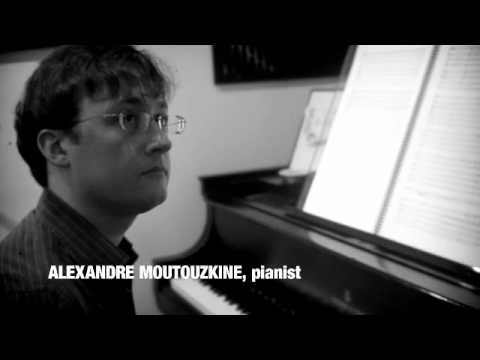
Sonata no. 21 in C major, op. 53 (Waldstein) (Alexandre Moutouzkine)

Linklist (1 hr 39 min)

Thursday, June 23, 2011

6/23 Sonata No.31 with Hélène Grimaud

It was just a couple days ago that I snuck in a Richter performance of Beethoven's Piano Sontata 31, so here's a more descriptive post with a performance by Hélène Grimaud..

From Allmusic:
Beethoven's piano sonatas grew in complexity and depth as the cycle of 32 progressed. The last dozen or so could be called absolute masterpieces of piano music, with the latter half of that group rising to a level that often inspires awe and wonderment. This work, though sometimes overshadowed by the mighty "Hammerklavier" Sonata, and the last, the C minor, Op. 111, seems quite as impressive as these better-known works. This unusual work, thematically threadbare at the outset, is a great and deeply profound composition, whose fugal finale achieves the highest keyboard art. This composition opens with a gentle, slow idea of strong spiritual character, the music sounding mesmeric, tranquil, chorale-like, intimate. Its fabric consists of many threads, but on the surface there is little of actual substance, at least from the standpoint of musical analysis. Yet this lovely but seemingly unpromising opening contains the seeds of this movement's rich thematic and harmonic material. The latter half of the first subject is borrowed from the Largo second movement of Haydn's Symphony No. 88, in G major. At the time Beethoven was writing this sonata, he was suffering the first bouts of the illness that would take his life six years later. The serene, rather valedictory mood of the first movement (Moderato cantabile, molto espressivo) may reflect his sense of mortality, of an impending doom. The second subject is lively, but in all its elements seems to be on the descent, expressing, perhaps the end of a journey. The development introduces some tension and subtly disrupts the serenity, without, however, essentially altering the general mood of tranquility.

The second movement (Allegro molto) is short and jovial. Or is it? It certainly starts off with a happy demeanor, but that temperament is periodically interrupted by a ponderous ritardando, which finally overtakes the direction and character of the piece. The third movement, marked Adagio ma non troppo, is somber, bordering on the funereal. This ponderous, dark music may reflect the composer's deepest doubts and disappointments. The finale begins without pause after the Adagio. Its theme, almost Bach-like in its contentedness and fugal character, sounds serene, expressing, perhaps, the composer's acceptance of his fate. This is a movement of great subtlety and beauty, and its structure is masterful and original. The middle section is quiet and dark, its mood looking back to the darkness of the Adagio. Suddenly the piano unleashes ten fateful chords in a slow crescendo. The main theme then reappears and struggles for a time with the dominant mood of darkness. Eventually it gains strength, transforming the movement into a triumphant, ecstatic, radiant utterance. 

Piano Sonata #31 In Ab, Op.110 (1822)

Linklist

(A slightly better video of this performance can be found here)

Monday, June 20, 2011

6/20 Listening to Music

One of the most unique (and rewarding) things about Beethoven (and classical music in general) is that it functions as music to be listened to. I mean listened to in the same way that most people read a book, or watch a movie (in a theater). Much of popular music today is really designed for dancing or as "mood" music - that's why there's so much repetition in the drum and bass line, and the song usually doesn't modulate in any kind of way to draw attention to the fact that "it's modulating". The dynamic level is arranged in a way so that it starts loud..and stays that way. This makes it easier to listen while at the gym, or driving in traffic. However classical music was never intended to be listened to as an attention-dividing experience. It's meant to be listened to and followed like a dramatic Russian war epic ("War & Peace"?). In a single piano sonata movement there is often a variety of mood swings and jokey witticisms littered throughout the exposition and development sections. And very often Beethoven will not just repeat the notes in the recapitulation, but add some new, poignant/funny element to keep it unpredictable.

Of course it's perfectly fine to just listen to a Beethoven symphony for the "vibe" - I do it all the time, especially since I have music playing every waking hour. But it's always worth mentioning that Beethoven is not just giving us "notes" - there's human drama and comedy splashed all over those string textures.

Here's a few ideas that have helped me to "read" classical music:

Listen for how each instrumental group (winds, horns, strings, percussion) enters
the piece. Then follow how B. uses each of these groups. In general, the strings are the lead instrument and the horns are used for extra "oomph".

Listen for the main motif or melody and break it up into it's "parts". By parts I mean the antecedent/consequent (call/response) nature of a theme melody. It's fun to listen to a melody and see how it gets echoed by other instruments and altered in different ways. My research on my blog post on homophonic forms was pretty handy to learn about theme structures.

Listen for the larger structure of the work - notice when the exposition repeats, how the development develops, and how the recap retransitions into the original theme. These are all signposts saying things like "You are now entering the State of Lyrical Theme in Dominant Harmony". If the work is in variation form, compare how Beethoven develops and twists the original theme.

These all may sound like school homework assignments I suppose, but after awhile this kind of "active listening" becomes as easy as recognizing when a commercial comes on during a TV show and it all just adds to the experience.  When an action movie slows down for some "romance", you don't have to think "oh it's the lyrical part".  But you do recognize it as a change in the mood and pace and this is exactly the kind of thing Beethoven wants us to feel during one of his symphonies.

The idea for today's post on "listening" came from an article about how reading and doing crosswords can block your ability to hear.

Piano Sonata #31 In Ab, Op.110 (1822)
Sviatoslav Richter

Link

Sunday, June 19, 2011

6/19 Beethoven Highlights from the 20th New Orleans International Piano Competition.

:  "Spencer Myer, a native of North Ridgeville, won first prize Sunday in the New Orleans International Piano Competition. He is shown here accepting the audience's applause after performing with the Cleveland Orchestra in the finals of the 2005 Cleveland International Piano Competition, in which he won fourth prize."
More piano music today featuring Beethoven highlights from the 2008 20th Annual New Orleans International Piano Competition.  Each of these videos features a (longish) infomercial by the sponsor (Hall Piano Company), followed by a Beethoven piece and some other works in the performance recital.  I put links below to go directly to the Beethoven sonatas, but the other works are also well worth checking out.

Di Wu: Piano Sonata 11, 1st & 2nd Movements
Di Wu of China performing: Beethoven Sonata #11 in B-flat Major, Op22; Ravel Excerpt from Miroirs.

Chetan Tierra: Piano Sonata 26 "Les Adieux", 1st Movement
Chetan Tierra of the United States performing: Alexander Scriaban Sonata No.4 in F-sharp Major, Op.30; Beethoven Sonata in E-flat Major, Op.81a, Les Adieux; Brahms Variations on a Theme by Paganinni, Book 1 Op.35.

Spencer Myer: Piano Sonata 24 "Fur Therese"
Gold Medalist Spencer Myer: Beethoven: Sonata No.24 F-sharp Major, Albeniz: Iberia Book 1, Evocation, El Puertp, Corpus Christi en Sevilla; Liszt: Venezia e Napoli, S.159 Gondoliera, Canzone, Tarantella.

Saturday, June 18, 2011

6/18 Valentina Lisitsa's Hanover Recording Sessions


Not too long ago I featured Valentina Lisitsa's exquisite rendition of Fur Elise here.  Ms. Lisitsa has a huge and wonderful Youtube channel featuring hours of her great pianistic ability, and so here's a "small" collection of her Beethoven recorded in Hannover, Germany, Dec 2009. 

Pt 1-3: Piano Sonata #7 In D, Op.10/3 (1798)
Pt 4-5: Piano Sonata #14 In C#m, Op.27/2, "Moonlight" (1801)
Pt 6-10: Piano Sonata #29 In Bb, Op.106, "Hammerklavier" (1818)

Linklist (Total length: 1 hour, 15 minutes)

More Beethoven by Ms. Lisitsa here - a LOT more.

Friday, June 17, 2011

6/17 All New Beethoven Guitar Hits!

There's nothing more educational (for me, at least) than to post about Beethoven every single day - but a close second would arranging his works for guitar.  Taking a close look at each and every measure and tweaking them to fit in the context, range and style of a guitar is a bit of work - but quite rewarding.  A couple of my recent "experiments" are these two transcriptions: an arrangement of B.'s Symphony 3 "Eroica" 1st Movement (adapted from Franz Liszt's transcription for solo piano) and the Diabelli Variations (using a new guitar sound than my 2 previous versions).  As with my other guitar arrangements these sequenced realizations would  probably be extremely difficult (if not impossible) to play in real life without special tunings, etc...but they sound still pretty cool I think as "virtual extrapolations"...

Symphony 3 "Eroica" for 2 Guitars

Link

The Diabelli Variations for 2 Guitars

Link
Left Side Guitar - TOP                     Right Side Guitar = BOTTOM 
0:04 - Tema : Vivace
0:52 - Variation 1 : Alla marcia maestoso
2:22 - Variation 2 : Poco allegro
3:22 - Variation 3 : L'istesso tempo
4:15 - Variation 4 : Un poco piu vivace
5:03 - Variation 5 : Allegro vivace
5:52 - Variation 6 : Allegro ma non troppo e serioso
7:24 - Variation 7 : Un poco piu allegro
8:40 - Variation 8 : Poco vivace
9:47 - Variation 9 : Allegro pesante e risoluto
11:25 - Variation 10 : Presto
12:24 - Variation 11 : Allegretto
13:40 - Variation 12 : Un poco piu moto
14:45 - Variation 13 : Vivace
15:53 - Variation 14 : Grave e maestoso
19:46 - Variation 15 : Presto scherzando
20:34 - Variation 16 : Allegro
21:39 - Variation 17 : Allegro
22:45 - Variation 18 : Poco moderato
25:10 - Variation 19 : Presto
26:07 - Variation 20 : Andante
27:32 - Variation 21 : Allegro con brio - Meno allegro
28:50 - Variation 22 : Allegro molto ( alla 'Notte e giorno faticar' di Mozart)
29:36 - Variation 23 : Allegro assai
30:25 - Variation 24 : Fughetta ( Andante)
32:52 - Variation 25 : Allegro
33:37 - Variation 26 : Piacevole
34:21 - Variation 27 : Vivace
35:09 - Variation 28 : Allegro
36:11 - Variation 29 : Adagio ma non troppo
37:19 - Variation 30 : Andante, sempre cantabile
38:49 - Variation 31 : Largo, molto espressivo
42:28 - Variation 32 : Fuga (Allegro)
46:07 - Variation 33 : Tempo di minuetto moderato


This is my 3rd try at making a Diabelli Variations guitar recording, I think it's the final version...the previous two are OK but this one has the best guitar sound I think.  Previous versions:

Electric and Acoustic guitars: http://www.youtube.com/watch?v=o0RyJF5Uavo
Acoustic Guitars (1st version): http://www.youtube.com/watch?v=ZTg1GWIiX7w


However, for a live rendition of an arrangement of B.'s 5th Symphony I think this is the guy to beat:
Warning - very loud recording...

Beethoven 「運命」 LUNA KENZO

Thursday, June 9, 2011

6/9 Für Elise on Guitar (Twice)

I can't believe I haven't featured a guitar version of Für Elise on this blog yet.  It's such a ubiquitous piece I suppose I avoided it on purpose for most of this past year.  Well anyways, here are 2 wonderful arrangements on guitar performed by 2 excellent guitarists...live.

Transcribed and performed by by Fredrik (FreddeGredde) Larsson:

Link

A more "liberated" performance by

Link

(FYI: Taking a break from Thursday analysis for a few weeks)

Wednesday, June 8, 2011

6/8 Beethoven's Homework: Correcting Mozart

As part of his compositional studies (which he continued his entire life) Beethoven would copy out works such as this one, Mozart's Fugue in C Minor, KV 426.  The interesting thing here is that he made some "corrections" - as well as some "mistakes".  The Unheard Beethoven site has a midi file of B.'s corrected/messed up version of Mozart's most difficult fugue -and so I rendered it in a "Beethoven 360" soundfont....

From The Unheard Beethoven's description:

Copy of Mozart's Fugue in C minor, KV.426, Hess 37 (Date of Beethoven's version unknown). Without any doubt, Mozart's Fugue in C minor for two pianos, KV.426, is one of the greatest fugues ever written since the death of J.S.Bach. A staggering amount of canonic devices is let loose on the fugue's main subject, while maintaining a remarkable clarity of texture, demonstrating Mozart's total control of counterpoint. At the same time the music is pervaded with a holy anger one expects of a Beethoven, rather than a Mozart. In short, Mozart combines in this unique masterpiece Bach's intellectual techniques with Beethoven's deep passion. It's therefore important to realize that Beethoven not only knew Mozart's fugue, but even made a copy of it in his own handwriting. We must assume he was impressed by this work. It's somewhat surprising that, as far as we know, Beethoven never attempted to compose a similar fugue himself. There are 36 minor deviations in the copy compared to Mozart's original, most of them mere slips of the pen. Yet there are also several improvements by Beethoven...

Link

Since today has a kind of "pedagogical" theme, here's Yvonne Lefébure teaching how to play Beethoven: (Piano Sonatas 31, 32 (Op. 110, 111))

Monday, June 6, 2011

6/6 The Other Symphony in C Minor

YOUNG BEETHOVEN (Lladró Porcelain Figures) 
One of my favorite finds on the Unheard Beethoven site is the early Symphony in C minor which Beethoven sketched but never completed.  Composed while still in Bonn, this sketch exists mainly as a piano score, but with markings for future orchestration.  In any case, it stands with the early Piano Quartet WoO. 36 as some of my favorite early Beethoven.  I have no idea why this is not more well known...

The Unheard Beethoven site features a midi version using full orchestration, completed by Willem, but I've never had much luck with full-symphony midi files.  So what I did here is to condense this completion back into piano score (in the video below), though I kept the timpani part.

Symphony Movement in C minor, Hess 298. (1791/93). orchestrated and completed
Midi Author: xickx
(The Unheard Beethoven)
"The Hess 298 sketch can be found in the Kafka Sketchbook, which is in the British Library. The heading reads: Sinfonia, and the tempo indication is Presto. It is in 3/4 time. The 111 bars long sketch is written on two staves, as if for piano. We have therefore not only the main melody, but also the bassline, which indicates unambiguously the intended harmonies. Once, in bar 91, there is an indication regarding the orchestration: obo[e]. Following this big chunk there are two little snippets, one 9 bars, the other 5 bars long. Clearly Beethoven intended to write a movement in Sonata form: the sketch covers the larger part of the expostion, with a first theme in C minor (bar 1), a transition (bar 68) and a second theme in the parallel key of E flat major (bar 86). The sketch breaks off halfway the second theme group.
"As is clear from the state in which Beethoven has left the sketch, it is impossible to complete this movement without the addition of extra material. A completion can therefore never claim to be authentic. It should be stressed that the aim of such a completion is to merely provide a framework which places the notes as written by Beethoven in an appropriate context, so that they can be judged and enjoyed as real music."

Willem's orchestrated version can be found here.  A midi of Beethoven's original sketch can be found here.

My reduction of Willem's orchestral arrangement to piano and timpani is below:

Link

Friday, June 3, 2011

6/3 Phan's Freestyle Pathetique

I've featured different kinds of dance accompaniments to Beethoven before (1/15 Quartet with Obbligato Dancers and 4/22 Ballet & Beethoven) but this video features yet another approach: improvised "freestyle" dancing in a completely unpremeditated situation between a classical performance of Beethoven's Pathetique and Shawn Phan's "street style" dancing...apparently Beethoven is quite alive and well.  Phat.

"STORY: I walked into a classroom with a guy that was playing classical music. I was never a fan of that genre but for some reason....today....i wanted to dance to it. I asked him if he wanted to JAM and he said, "I'm down." He chose a song I never heard of but that's the cool thing about the art of freestyle and being on the spot and in the moment. One take.
Shawn Phan   Beatrockers"

Link

Thursday, June 2, 2011

6/2 Piano Sonata 12 (Color Analysis)

(Artwk by Chocolate-Cocoa)
Continuing visual breakdowns of Beethoven's piano sonatas... 

 Piano Sonata #12 In Ab, Op.26, "Funeral March" (1801)

- 1. Andante Con Variazioni (starting from 0:04)
- 2. Scherzo: Allegro Molto (starting from 6:44)
- 3. Marcia Funebre Sulla Morte D'Un Eroe (starting from 9:34)
- 4. Allegro (starting from 15:03)

The audio for this analysis was generated from a midi file originally sequenced by Bunji Hisamori in 1999.  I took that file and "spread" the notes so that listening to this on headphones will give a very distinct spacial distinction between the low voices and the high voices.  In other words, it sounds like you're sitting in front of the piano, with low notes on the right and higher notes going towards the right.  I'm calling this "Beethoven 360".  

CHANNEL LINK (Click here to see this video on my YT Channel. Once there, click on "(more info)" and then you can view the video in place, while scrolling through the text below)

Movement I. Andante Con Variazioni
Theme (GREEN)
Variation 1 (GREEN 1)
Variation 2 (GREEN 2)
Variation 3 (GREEN 3)
Variation 4 (GREEN 4)
Variation 5 (GREEN 5)
Coda (BROWN)

Movement II. - Scherzo: Allegro Molto
Part A
1st Part (GREEN)
2nd Part (BLUE)
3rd Part (PURPLE)
2nd Part (BLUE)
3rd Part (PURPLE)
Trio  (MAROON)
Part A Repeat
1st Part (GREEN)
2nd Part (BLUE)
3rd Part (PURPLE)

Movement III. - Marcia Funebre Sulla Morte D'Un Eroe
March (BLUE)
Trio (PURPLE)
March Reprise (BLUE)
Coda (DARK BLUE)

Movement IV. - Allegro (RONDO ABACABA)
1st Theme (I) (BLUE)
2nd Theme (V) (GREEN)
1st Theme (BLUE)
3rd Theme (Development) (iii) (PURPLE)
1st Theme (BLUE)
2nd Theme (I) (GREEN)
Coda (VIOLET)

(Assisted by Donald Tovey's in depth analysis)

Wednesday, June 1, 2011

6/1 Röder's Electro-Acoustic Beethoven Cadenza

As someone with a background in electro-acoustic music, I was quite excited to hear about this project: pianist Seda Röder performs an original piano-&-electronics cadenza as part of a performance of Beethoven's Emperor Concerto. I have to admit I was a bit skeptical that it could work - but I can honestly say Ms. Röder pulled it off beautifully!  The trill going into the "modern" section was a stroke of brilliance.

From the video description:
In this video, New Music Pianist Seda Röder improvises the first-ever electro-acoustic cadenza for a classical concerto! Röder, who specializes on bringing contemporary music to new audiences, says that "the public at Beethoven's time would expect the soloist to improvise in the cadenzas. I wanted to do the same, but in a style that is my own and entirely modern." To turn this vision into reality, Seda worked together with Mexican composer Edgar Barroso who provided her with an electro-acoustic framework that she could use for her improvisations. When Röder was approached by Harvard conductor Hanjay Wang with the suggestion to perform with the orchestra of the Harvard-Radcliffe Chinese Students Association, the unusual idea finally came to life!  Please visit the artist's website to find out more about this very special project: http://www.sedaroeder.com/blackbox-011/
Seda Röder improvizes first-ever electro-acoustic cadenza for a classical concerto
Piano Concerto 5 Cadenza by Seda Röder and Edgar Barroso

Link

Sunday, May 29, 2011

5/29 Pianos, Cannons and the Gift of Fire

One of the best Beethoven-related sites around is the Unheard Beethoven site.  The people there have cataloged pretty much every Beethoven work not recorded (or seldom recorded) and posted midi files for B. fans to audition.  Midi files are more or less "piano rolls" of compositions and sometimes need a bit of finessing before they can sound musical.  So I took a few of these and did my best.... Here's the piano arrangement of Opus 43, "The Creatures of Prometheus" (Hess 90) authored by Willem.  I used my surround-piano sound ("Beethoven 360") for this...

From the Unheard Beethoven:
The Creatures of Prometheus op. 43, for Piano, Hess 90 (1801).
This transcription by Beethoven was published in 1801. The transcription quite faithfully follows the orchestral work, though with very different effects. Act One of the ballet--even including the overture--is much shorter than the second act. Act One concerns the creation of the first man and woman from dust by Prometheus; the second act concerns the education of these creatures. The theatre-bill for the first performance of March 28, 1801, describes the action as follows:  
"This allegorical ballet is based on the myth of Prometheus. The Greek philosophers, who knew of him, elucidate the story in the following manner--they depict Prometheus as a lofty spirit who, finding the human beings of his time in a state of ignorance, refined them through art and knowledge and gave them laws of right conduct. In accordance with this source, the ballet presents two animated statues who, by the power of harmony, are made susceptible to all the passions of human existence. Prometheus takes them to Parnassus, to receive instruction from Apollo, god of the arts, who commands Amphion, Arion and Orpheus to teach them music, Melpomene and Thalia tragedy and comedy. Terpsichore aids Pan who introduces them to the Pastoral Dance which he has invented, and from Bacchus they learn invented, and from Baccus they learn his invention, the Heroic Dance. The music is by Herr van Beethoven."
Link
More on The Creatures of Prometheus op. 43 in a previous post HERE.

Another piece I worked out is Wellington's Victory, or the Battle of Vittoria op. 91, for Piano and Two Cannons, Hess 97.  In this case I spruced up the cannons mostly - because I'm such a "cannon-expert" of course...(Midi Author: Mark S. Zimmer).
From the Unheard Beethoven:
Wellington's Victory, or the Battle of Vittoria op. 91, for Piano and Cannons, Hess 97 (1816)
This is certainly the strangest of Beethoven's arrangements for piano, since it also calls for two cannon to be fired throughout the first (Battle) portion of the piece. In this midi, the English forces are on the right channel; the French are on the left. As the battle progresses, the English march toward and take the center, forcing the French further left and eventually completely off the soundstage. The piece was wildly popular in its time as anti-Napoleonic feeling increased in Europe. This "symphony" (as Beethoven referred to it in letters) is easily the most clearly descriptive piece Beethoven ever wrote. The transcription ends, as does the orchestral version, with a fugato treatment of "God Save the King." Published 1816 by Steiner in Vienna.

Link

Thursday, May 26, 2011

5/26 Piano Sonata 11 (Color Analysis)

(Artwk by Chocolate-Cocoa)
Continuing visual breakdowns of Beethoven's piano sonatas...

Piano Sonata #11 In Bb, Op.22 (1800)

- 1. Allegro Con Brio (starting from 0:04)
- 2. Adagio Con Molta Espressione (starting from 7:35)
- 3. Minuetto (starting from 15:33)
- 4. Rondo: Allegretto (starting from 18:44)

The audio for this analysis was generated from a midi file originally sequenced by Bunji Hisamori in 1999.  I took that file and "spread" the notes so that listening to this on headphones will give a very distinct spacial distinction between the low voices and the high voices.  In other words, it sounds like you're sitting in front of the piano, with low notes on the right and higher notes going towards the right.  I'm calling this "Beethoven 360".  

CHANNEL LINK (Click here to see this video on my YT Channel. Once there, click on "(more info)" and then you can view the video in place, while scrolling through the text below)

Movement I. Allegro Con Brio (Sonata form)
Exposition
1st Theme (I) (GREEN)
Transition (BLUE)
2nd Theme (V) / Cadence (BROWN)
Exposition Repeat
1st Theme (I) (LT GREEN)
Transition (LT BLUE)
2nd Theme (V) / Cadence (LT BROWN)
Development (VIOLET)
Recapitulation
1st Theme (I) GREEN)
Transition (BLUE)
2nd Theme (I) / Cadence (BROWN)

Movement II. - Adagio Con Molta Espressione
Exposition
1st Theme (I) (GREEN)
Transition (BLUE)
2nd Theme (V) (MAROON)
Development (DARK BLUE)
Recapitulation
1st Theme (I) (GREEN)
Transition (BLUE)
2nd Theme (I) (MAROON)

Movement III. - Minuetto
Part A
1st Theme (GREEN)
2nd Theme (BLUE)
1st Theme Var. (GREEN 2)
2nd Theme (BLUE)
1st Theme Var. (GREEN 2)
Trio B (vi) (BROWN)
Part A Repeat
1st Theme (GREEN)
2nd Theme (BLUE)
1st Theme Var. (GREEN 2)

Movement IV. - Rondo: Allegretto
1st Theme (I) (BLUE)
2nd Theme Group (V) (MAROON)
1st Theme (BLUE)
3rd Theme (i) (GREEN)
1st Theme (BLUE)
2nd Theme Group (I) (MAROON)
1st Theme (BLUE)
Coda (PURPLE)

(Assisted by Donald Tovey's in depth analysis)

Tuesday, May 24, 2011

5/24 Schumann's "Kreisleriana"

B. Monument
Robert Schumann was a big fan of Beethoven.  He composed his Fantasy Opus 17 as part of a fund raiser towards a Beethoven monument (right).  He also composed "Beethoven Etüden, WoO31", several variations on B.'s 7th Symphony Allegretto.  It can be heard here and here.  However today's post is about Schumann's "Kreisleriana", one of my favorite Schumann works...which I think B. would have liked as well.

Allmusic:
Eccentric, wild, and clever aptly sum up one aspect of the work, but Kreisleriana is tender, ardent, and passionate as well. This alternation between the fantastic and the lyrical, the grotesque and the loving, is one of the key characteristics of Kreisleriana. Written in four days in April 1838, it is dedicated to Chopin in the score, but, like most of Schumann's piano music from the late 1830s, it is really about Schumann's love for Clara Wieck. Extremely virtuosic and extremely subjective, Schumann's Kreisleriana is one of the high points of his compositional career.

1. Ausserst bewegt (Extremely moving) Fast and diabolical D minor outer sections flank a slow and supple B flat major central section.

2. Sehr innig und nicht zu rasch (Very inwardly and not to quickly) This is a triple time-stylized dance movement with two trios. After a tenderly musing B flat major outer section follows the fast and capricious Intermezzo I in G minor. After the return of the opening section follows the fast and passionate Intermezzo II in G minor. The second Intermezzo is followed by intensely chromatic music and darkly wends it way back to the final return of the opening.

3. Sehr aufgereg (Very agitated) Quietly creeping chromatic music in G minor, reminiscent of the first movement, flanks somewhat slower and deeply affectionate music in B flat major. The return of the G minor music is at first exact, but rises to a fortissimo climax in which the rhythm slows and the music drops down into the depths of the piano.

4. Sehr langsam (Very slowly) This meditative music in B flat major has intense lyrical music, bordering on a recitative, followed by intimately poetic music hovering between quietness and stillness.

5. Sehr lebhaft (Very lively) In this pianissimo triple-time movement in G minor that is close to a Scherzo in tone and speed are two trios: one whimsical and the other building to a dramatic climax.

6. Sehr langsam (Very slowly) The heart of Kreisleriana starts with a folk-like melody in B flat major, but transforms into an extremely ardent central section in C minor.

7. Sehr rasch (Very fast) A violently excited movement in C minor, the velocity and intensity increase in a central fugato until it collapses in slower, chorale-like music at its close.

8. Schnell und spielend (Fast and playful) This G minor music skulks and slinks in seemingly two tempos at once: the right hand's frisky melody moving in one tempo while the left hand's slow-moving melody in octaves is slightly out of sync. The music enigmatically ends on the bottom of the keyboard. 


From live performance at Tokyo Opera City Recital Hall in June 2009 by Akiko Nakai

Linklist