Showing posts with label Life. Show all posts

Tuesday, January 23, 2018

Ed Chang Speaks About Beethoven on Cosmoetica

     Last week I had the pleasure of being Skype-interviewed by Dan Schneider, who has, for the last few years, been producing a series of long-form, unedited interviews on his Cosmoetica YouTube channel with actors, writers, academics and scientists (my interview was Episode No. 232).

     Although I haven't updated this blog in quite awhile, it was nice to reach back and hit on some highlights I'd discovered along the way of producing this year-long daily project.

Link

A chapter list is as follows:

0:19 Intro by Dan Schneider
1:09 Ed Chang on how he got into Beethoven and blogging
7:50 Is classical music more complex than pop?
14:07 Beethoven's Human Struggle
22:53 Demythologizing deafness and the creative process
29:08 The Hypnotic Moonlight Sonata
34:47 The Kreutzer Violin Sonata and Beethoven's punk styles
39:17 Fur Elise, 5th symphony and how Beethoven does it
45:07 The Coriolan Overture, Epic movie music
50:29 Young Beethoven, Arrogant student
52:19 Fantasia in G minor, Bartok, avant-garde medicine
56:12 The 7th Symphony Allegretto 2nd movement and Beethoven's film assignments
1:01:10 The dialogue of the 9th Symphony 4th movement (Ode to Joy) and early sampling techniques
1:10:40 Why so Angry Beethoven?
1:14:33 Wagner a 2nd rate Beethoven?
1:16:46 Ed's current blog projects
1:19:50 Who is today's Beethoven?

The video mashup I mentioned of Beethoven's Coriolan Overture with The Lord of the Rings can be seen here: https://www.youtube.com/watch?v=bNXnP... The video I mentioned of Bartok performing Beethoven can be seen here: https://www.youtube.com/watch?v=AZG2i... A visual explanation of the "conversation/medley" aspect of the 9th Symphony 4th movement can be seen here: https://youtu.be/IAMDC-wXZU4?t=39m40s This video has been slightly remixed from the original video posted at Cosmoetica here: https://www.youtube.com/watch?v=dmvmg... Dan Schneider's YouTube Channel is here: https://www.youtube.com/user/cosmoetica "The home for spoken word prose and poetry excerpts, as well as the Dan Schneider Video Interview series, an extension of the Dan Schneider Interviews, the most read interview series of all time" http://www.cosmoetica.com/DSI.htm Dan Schneider's Cosmoetica Vimeo channel: https://vimeo.com/channels/872868

Wednesday, April 20, 2011

4/20 Beethoven's Piano Partners (Fortepiano Survey)

Beethoven went through alot of pianos in his life (though only 3 that we know for sure). Here's an idea of his collection:

The organ Beethoven used to play in Bonn as a youngster.
"Schanz" piano from 1790.  This actually isn't one of B.'s pianos but it's likely he played
on one like this in his 20s. (from Paul Badura-Skoda's collection)
"Erard" Piano.  This was a gift from Prince Lichnowsky in 1803.  B. found it a bit limiting...
Drawing of B.'s "Thomas Broadwood" piano, given to him in 1818. 
Eventually bought by Franz Liszt (the piano, not the drawing).
"Conrad Graf" piano received as a gift in 1825.  Probably the last piano B. really used, since the
Broadwood was starting to fall apart from all those hammerblows....
Colored version of Hoechle drawing of B.'s last apartment.
B. actually had the Broadwood and the Graf end-to-end
but this only shows the Broadwood.
A discussion of Beethoven's pianos would take many pages - so I recommend getting "The Beethoven Companion" edited by Denis Arnold and Nigel Fortune which has a pretty big chapter on B.s pianos and how they affected his compositional evolution.

While you're waiting for that to arrive here's Jorge Demus (I think) playing one of my favorites: Beethoven's Bagatelle in B Minor op, 126 No. 4.

http://youtu.be/RssT3vM754I

Below is a playlist collecting a couple hours worth of Beethoven on fortepianos...the first 6 are on 4 different fortepianos played by Hiroaki Ooi:
1 - Piano Sonata Op. 49-2 No. 20 II Tempo di Menuetto (1796)
(replica after A.Stein ca. 1790, 5-octave)

2 - Piano Sonata Op. 57 No. 23 "Appassionata" I Allegro assai (1805)
(Jones-Round 1805, 5 1/2-octave)

3,4 - Große Fuge (Winkler Arr.) Op. 133 (1826)
(J. Broadwood 1816, 6-octave)

5,6 - Symphony No. 3 "Eroica" Op. 55 (Liszt Arr. 1865?)) I Allegro con brio
(J. Streicher 1846, 7-octave)

7, 8 - Piano Sonata #14 In C#m, Op.27/2, "Moonlight"
9-12 - Piano Sonata #31 In Ab, Op.110 (Nasseri)
13 - Variations in F, Op.34 (Ochoa)
14, 15 - Piano Sonata #26 In Eb, Op.81A, "Les Adieux" (Tan)
16-18 - Piano Sonata #21 In C, Op.53, "Waldstein"
19 - Piano Sonata #26 In Eb, Op.81A, "Les Adieux" (Demus)
20 - Piano Sonata #32, Op.111 - Maestoso (Demus)
21 - Piano Sonata #11 In Bb, Op.22, M1

Playlist: Beethoven Fortepianos

Saturday, April 16, 2011

4/16 In Search of the Magnificent Rebel

Today I'm going to feature a kind of "smorgasboard" Beethoven biography program.  From Disney's TV show from the Golden Age of TV comes "The Magnificent Rebel - The Story of Beethoven".
60 minutes, followed by the trailer:
Karl Boehm stars as Ludwig van Beethoven in this lavish Disney production, filmed on location in Europe. Beethoven is depicted as an intense, moody individual, who pours out his emotions in music--and in the occasional romance. The incessant din of the Napoleonic wars causes Beethoven to lose his hearing, after which he becomes more withdrawn than ever. He is humanized through the friendship of a blind youth, who gives him the fortitude to continue his work. (originally telecast in Walt Disney's Wonderful World of Color, was released theatrically in Europe. ~ Hal Erickson, Rovi
Playlist


Another GREAT drama about Beethoven is the TV production "Beethoven Lives Upstairs".

Link

Monday, March 28, 2011

3/28 LvB Timelines

Timeline of the Universe (NASA)
One of the most thorough Beethoven websites I've found is Gary D. Evans' Indexed Biography. The highlight of his site is his timeline which tracks Beethoven's life, year by year, linking works with life changes with historical happenings. If you ever wanted to know what B. did at age 18 you can see an excerpt from Gary's site below:

AGE 18 THROUGH AGE 19 [1789]
WORKS CREATED [BURST OF CREATIVE ACTIVITY]
op 39: 2 Preludes for organ or piano
op 52: 8 Leider
WoO 1: Musik zu einem Ritterballett
WoO 38: Trio-piano,violin cello #8 in Eb
WoO 40: 12 vars for piano & violin in F
WoO 64: 6 vars for harp or piano in F
WoO 65: 24 vars in D on "Venni Amore"
WoO 67: 8 vars for piano duet in C theme composed by Count Waldstein.


DATE


LIFE NOTES

OTHER NOTES
Jan 3 Opera Theater opened in Bonn. B. played viola
in orchestra where met Nikalaus Simrock (horn) & Antone Reicha (flautist).
Works performed included Mozart's

"Die Entfuhrung aus dem Serail"
October Storming of the Bastille in France.
Oct 13- 2/23/90 2nd opera season at the Opera Theater - works
performed included Mozart's "Nozzedi Figaro" and his "Don
Giovanni"
Nov 20 B. made request of Bonn officials for ½ father's
salary given father's alcoholism (½ of 200 Rheinthalers) for brothers
& household care. Father ordered to leave Bonn. Beethoven's father asked
him to not use the decree granted and instead gave Beethoven 25 Rheinthalers
per quarter. This was faithfully continued for the following 3 years
until his death in December 1792 [Anderson v1p5-6: see 1793]
? Played viola in court & theater orchestras.
? Wegeler back from Vienna Med.Sch. - now MD.
Practice./profess. med. in Bonn

As you can see it's well-organized and provides pretty much everything you need to know about B.'s work and life in that year.  Enter the site here:  http://www.ringnebula.com/Beet/

Another pretty cool more "visually-oriented" timeline of classical music in general can be found here:
Hernan Mouro's Timeline page.  Mr. Mouro's page is pretty cool because you can drag it around from the bottom half and see virtually the entire history of classical music in one page.  Excellent use of a timeline web-widget!

For more timelines of classical music in general, these are some great links:

Tuesday, March 8, 2011

3/8 Music for Winds and Somersaulting Horses

(too much sforzandi?)
Continuing from yesterdays "brass" theme I found a great little chart of Beethoven's entire wind chamber music oeuvre from Tim Reynish's blog:

Tim's article is a good overview of B.'s wind output (no pun intended) and in it he reminded me of this great letter from B. to his student and patron the Archduke Rudolph:
To The ARCHDUKE RUDOLPH
 
I notice that your Imperial Highness wishes to make an experiment on horses by means of my music. It is to see, so I perceive, whether the riders thereby can make some clever somersaults. Ha ha, I must really laugh at your Imperial Highness thinking of me in this matter; for that I shall be to the end of my life,
Your most willing servant,
Ludwig Van Beethoven.
N.B.— The desired horse-music will reach your Imperial Highness at full gallop.

From a D.G. CD liner note: "In 1810 Beethoven added a second march, WoO.19, for a horse show held on the grounds of the imperial summer residence at Laxenburg, near Vienna, in August"

So forthwith are some march classics (including WoO.19) for the equestrian set.  Now, these are not exactly paragons of Beethovenian sublimity or even works which B. listed with official opus numbers, but they are, yes, another interesting demonstration of his versatility in many different genres - also they are pretty fun!

0:00 York'scher March for Military Music, WoO.18(1809)
1:27 March in F for Military Music, WoO.19(1810) ("Horse-music")
3:13 March und Trio for Military Music, WoO.20(1820) 'Zapfenstreich' (The Tattoo)
7:05 March in D for Military Music, WoO.24(1816)

Tuesday, January 25, 2011

1/25 Beethoven Selects his Greatest Hits


I always like getting recommendations from people who I respect when I want to discover some good music. So what would LvB have recommended (out of his own music that is)?

Well, later in life he definitely would not have recommended his Septet, Op.20, which was actually kind of an early hit with the public. "I wish it were burned", he said, according to Thayer. Also in a letter about his Sextet Op.71: "All that one can really say about it is that is was written by a composer who has produced at any rate a few better works". The 2nd Piano Concerto he admitted was "not one of my best" and sold it at a discount. He admitted in one letter that the overtures "Ruins of Athens", "Nameday" and "King Stephen" were not his "best and greatest".  He once wondered why so many people were crazy about Piano Sonata No. 14 ("Moonlight"), since he thought "Fur Therese" Op.78 (NOT "Fur Elise") was so much better.

However, he was known to name his 3rd Symphony ('Eroica') and the 9th Symphony as favorites later in life and described the 7th Symphony as "one of the happiest products of my poor talents". At one point his favorite piano sonata was Op.22, then Op.57 ("Appassionata"), and then later still Op.106 ("Hammerklavier").
Before the 9th Symphony came along, he said of the Missa Solemnis, "(it's) the greatest work I have ever composed" (tho I'm not sure if that's a quote from an actual conversation, or a fund-raising letter...). Of the string quartets, his favorite was Op.131 in C-sharp minor (which is usually considered his best by many today). And his 'Cavatina' movement from String Quartet Op. 130 always made him cry whenever he thought about it.  He never got tired of his song "Adelaide" Op.46, either for some reason.

So there you have it, if Beethoven were alive today to produce his "Greatest Hits" it would have Symphonies 3,7 and 9, Piano Sonatas "Appassionata" and the "Hammerklavier", String Quartet Op. 131 and Op. 130 and probably the "Gloria" from the Missa Solemnis. Maybe a bonus track would be "Adelaide"....or a remix of the Septet Op.20 with more timpani....?

Here's a transcription of "Adelaide" for guitar and voice, possibly by Anton Diabelli.  I dare someone to sing this at the next Lilith Fair...:)
(Elizabeth Parcells)

(A traditional arrangement of Adelaide can be found HERE)

Monday, January 24, 2011

1/24 Musical Life in Vienna c.1800

Anne-Louis Coldicott wrote probably the best article I ever read on musical life in Beethoven's time.  Originally collected in the book "The Beethoven Compendium" (Cooper, Borders Press), here's a healthy excerpt (I left out the stuff about Bonn):

"BEETHOVEN’S LIFE WAS SPENT in two centres. His formative years were in his birthplace Bonn, in the German Rhineland, and his years of attainment in faraway Vienna, the capital of the Austrian Empire and the musical capital of Europe...The Vienna in which Beethoven found himself in 1792 was without doubt the leading musical city in Europe. All types of music flourished, and opera was probably the most popular. French operas, particularly those by Cherubini (Italian by birth but French by adoption) and Méhul, were the most enthusiastically received. Their popular revolutionary themes appealed to Beethoven and inspired him to attempt an opera of his own, first 'Vestas Feuer', which was not completed, and then 'Fidelio'.

     "A high standard of orchestral and chamber music was attained by the private orchestras and ensembles maintained by the imperial court and members of the nobility. The wealthies nobles, such as the Princes Lobkowitz and Lichnowsky and Count Razumovsky, had concert halls within their palaces. First-class recitals could be heard in salons both in their palaces and in private houses whose wealthy owners patronized individual performers. Touring virtuosi were much sought after, and these occasions also provided excellent opportunities for aspiring new-comers to establish themselves. One of the leading exponents of chamber music was the violinist and conductor Ignaz Schuppanzigh. He led several string quartets in Vienna over a long period. The first, dating from 1796, performed once a week at Prince Lichnowsky’s palace, presenting works by Forster, Haydn and Mozart. Schuppanzigh quickly established a lasting and productive friendship with Beethoven and was to play an important role in introducing his chamber music in Vienna, initially with the first performance of the Op.18 String Quartets. In 1804, he formed another quartet which gave the first public string quartet recitals. In 1808, Count Razumovsky engaged Schuppanzigh to form a resident quartet, which performed the three Op. 59 String Quartets that the Count had commissioned from Beethoven. This quartet was abandoned only in 1816 following the destruction of Razumovsky’s palace, whereupon Schuppanzigh left Vienna. Earlier travels had taken him all over Europe; this time he travelled to Russia, where he promoted the music of Haydn, Mozart, Beethoven and Schubert. His return to Vienna in 1823 may have had some influence on the composition of Beethoven’s late quartets.

     "Virtuoso performers who visited Vienna were not only popular with their audiences, but served as inspirations to native musicians. In Beethoven’s case the stimulus was two-fold. The effect of the arrival of the pianists Wolffl and Cramer in 1798/9 was to raise the standard of his own playing to new heights. Other instrumentalists inspired him as a composer. For example, he wrote his Mandolin Sonata (WoO 43) for Wenzel Krumpholz, the Horn Sonata Op. 17 for Johann Wenzel Stich (who preferred to be known as 'Punto'), and the Violin Sonata Op. 47 (‘Kreutzer') for George Bridgetower. Less specifically, the playing of his Cello Sonata Op. 5 no. 2 by the virtuoso double-bassist Dragonetti alerted Beethoven to that instrument’s potential and influenced his orchestral treatment of it.

     "Public orchestral concerts had begun to be a feature of Viennese musical life since the 1770s. The Tonkunstlergesellschaft, founded by Gassmann in 1772, was the first independent body to promote concerts, with four annual performances at Lent and Christmas for the benefit of musicians’ widows and orphans. In 1812 the Gesellschaft der Musikfreunde was founded by Joseph Sonnleithner, and in 1819 Franz Xaver Gebauer, an early member of the Gesellschaft der Musikfreunde, founded and became the first conductor of the Concerts Spirituels, modelled on the French series of the same name. Besides these, there were a few subscription concerts (that is, concerts where the audience had guaranteed to subscribe in advance) given by both resident musicians and visiting virtuosi.

     "There were no purpose-built concert halls until 1831, when the Gesellschaft der Musikfreunde acquired its own premises. Theatres and halls primarily intended for other purposes were therefore used. Beethoven presented Akademien (concerts) in the two court theatres, the Burgtheater and the Karntnertor Theatre, within the Hoff theater. The most important private theatre was the Theater an der Wien, the venue of the first public performance of a number of Beethoven’s major works. Amongst a number of other private theatres may be cited the Josephstadt Theatre, to celebrate the reconstruction of which Beethoven wrote the overture The Consecration of the House,Op. 124.

     "Of the halls, three were most frequently used: the Zur Mehlgrube (literally ‘At the Sign of the Flour Shop’), the Jahnischer Saal and the Augarten. All three were primarily restaurants where slightly less formal concerts took place, usually during the daytime. Other possible concert venues were to be found within the imperial castle. These were the two Redoutensaal, the Rittersaal and the Zeremoniensaal. Most used was the Grosser Redoutensaal, a ballroom which could accommodate particularly large concerts. One further venue, which was the scene of many Beethoven performances, was the University’s Festsaal, which was used by the Gesellschaft der Musikfreunde before they had their own hall.

     "The Burgtheater had its own resident orchestra which could be hired for concerts at other venues, but it was more usual for orchestras to consist of adhoc collections of good amateur players, sometimes augmented by a few professionals. Public concerts were usually organized and financed by individual promoters, generally composers, conductors or virtuoso instrumentalists, who assumed control of the entire event: the programmes, the performers, the publicity and the sale of tickets. A translation of a programme prepared in advance by Beethoven may be reproduced here:

Today, Wednesday April 2 1800 
Herr Ludwig van Beethoven will
have the honour to give 
A Grand Akademie Concert
in the Royal Imperial Court Theatre beside the Burg. The pieces which will be performed are the following: 

1. A Grand Symphony by the late Kapellmeister Mozart.
2. An aria from ‘The Creation’ by the Princely Kapellmeister Herr Haydn, sung by Mlle Saal.
3. A Grand Concerto for the pianoforte, played and composed by Herr Ludwig van Beethoven.
4. A Septet, most humbly and obediently dedicated to Her Majesty the Empress, and composed by Herr Ludwig van Beethoven for four stringed and three wind instruments, played by Herren Schuppanzigh, Schreiber, Schindlecker, Bar, Nickel, Matauschenand Dietzel.
5. A Duet from Haydn’s ‘Creation’ sung by Herr and Mlle Saal.
6. Herr Ludwig van Beethoven will improvise on the pianoforte.
7. A new Grand Symphony with complete orchestra, composed by Herr Ludwig van Beethoven

Tickets for boxes and stalls are to be had of Herr van Beethoven at his lodgings in the Tiefen Graben No. 241, third floor, and of the box-keeper.
The admission prices are as usual
The start is at half past 6

     "The length of the above concert would not have been considered out of the ordinary at the time, but a programme consisting of the works of just these three composers was unusual. After the Congress of Vienna the pattern of cultural life changed. Musicians were not supported to the degree they had previously enjoyed, and with less money about there were fewer commissions. Tastes changed too. Italian opera of a very light kind became all the rage with the Viennese public, who clamoured for greater spectacular effects at the expense of the drama and music. This was perhaps an understandable reaction after years of war, but it satisfied only on a superficial level. Beethoven felt himself out of sympathy with the wider public at this time. This and the torment of his current domestic affairs saw a stagnant period as far as his composition was concerned. Gradually it became apparent that more enlightened people were also not satisfied with the trivial nature of the music in fashion. The later works of Mozart seemed to satisfy their deeper feelings, and previously neglected works of Haydn enjoyed a new-found popularity. From around 1818 Beethoven’s compositional inspiration was rekindled and his music displayed a new intensity. He was now seized on as the true artistic apostle of the age, with his music assuming the new values which emerged from the turmoil of war and destruction."
ANNE-LOUISE COLDICOTT

Thursday, January 20, 2011

1/20 Playing the European Circuit...with Beethoven

Map of 1801 with some tour cities circled (except London, just seemed relevant).
(orig from Atlas To Freeman's Historical Geography,Longmans Green and Co 1903)
One aspect of Beethoven's life which doesn't get talked about as much is his concert tour career.  In B.'s time, just as in our time, many composer/musicians travelled throughout Europe to make additional income.  Mozart of course was a pro "on the road", and Haydn first met Beethoven on one of his own tours.  Unfortunately when B. moved to Vienna to study with Haydn, Papa H. went on tour again (to England) and was generally too busy to correct Ludwig's homework. Beethoven himself spent only a few years touring seriously, since after his hearing deteriorated he realized it wouldn't be too prudent to play out quite so often.  Even at the end of his life tho, there was great demand for B. to go to England.

Here's a chronology of Beethoven's "Touring Career" (based on what little documentation exists):

1796: Feb-March: Extended visit (tour) to Prague with Count Lichnowsky.  Composes "Ah, Perfido!"and some mandolin music WoO 43-44 for Countess Josephine de Clary in Prague (see bottom of today's post).
"Beethoven spent several weeks in Prague playing not only his own compositions in concerts, but also improvisations which won the favor of his audiences.  His mastery of extemporization was incomparable.  Upon departing from Prague he had made many friends plus a considerable amount of money." (City Museum, Prague)

Apr-July - Arrives in Dresden, soon performs for the Elector of Saxony, then leaves for Leipzig and Berlin.
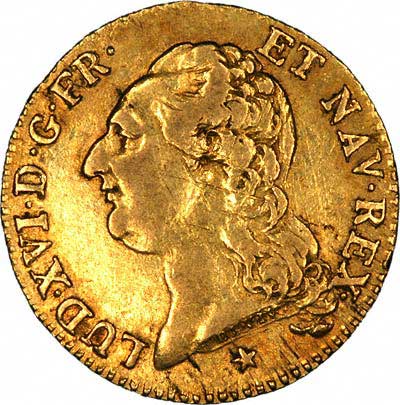
Obverse of Louis XVI Gold Louis D'Or
"Beethoven used the opportunity of his presence in the Prussian capitol to play for the court and for larger audiences several times, primarily in the concert hall of the Singakademie.His skillful improvisations at the piano on themes given him by the audience apparently left a deeper impression than did his own compositions....Frederick William II, King of Prussia had Beethoven play for him on several occasions, and on his departure presented him with a golden box filled with louis d'ors." (Former State Library, Berlin)
While in Berlin, Beethoven composes Cello Sonata #1, Opus 5 (dedicated to the Prussian King) for court cellist Jean-Louis DuPort as well as the "Judas Maccabaeus" Variations WoO 45 and other works.
(The Berlin Singakademie in 1843 by Eduard Gaertner)
July: Back to Vienna (possibly to feed the horse?)

November: Tour to Pressburg (Bratislava) and Pest/Budapest (concert on Nov 23)

1798 - October (or thereabouts): 2nd visit to Prague to perform his 1st and 2nd Piano Concertos.

1800 - May-July: Return visit to Budapest, performances include Horn Sonata Op.17 with "Punto" (Jan Václav Stich).
"Don't call me Jan."
(Thanks to the Beethoven Compendium for some dates info)
Here's an "all-mandolin" arrangement of the Sonatina for Mandolin and Harpsichord in C major WoO.44a:

Arrangement for mandolin orchestra: Tomislav Kalebić
Mandolin Orchestra "Sanctus Domnio", Conductor: Frane Kuss, Recorded in Zagreb (Croatia), 2006

Tuesday, January 18, 2011

1/18 Beethoven was My Piano Tutor

Imagine how many people must have wanted to take piano lessons from Beethoven in his heyday...like taking guitar lessons from Jimi Hendrix!  Actually, Beethoven did teach a few lady friends he was attracted to, but only a few people became his "official" students.
In general Beethoven hated giving lessons.  In his early days in Bonn he gave lessons from age 15 at students' homes but half the time he would knock on the door and then change his mind at the last minute, telling them that he'd come to tell them that he couldn't make it that day.  In his early years at Vienna, he seems to have given lessons to Ferdinand Ries, Carl Czerny...and lots of young women.  A couple ladies were actually virtuosi (Baroness Dorothea von Ertmann, to whom Opus 101 was dedicated being a notable example) but most were young well-to-do women who he eventually fell in love with.  Sadly, people who were able to afford piano teachers were typically looking to marry Counts and Princes...

Ferdinand Ries writes:
"When B. gave me lessons, I must say that contrary to his nature he was extraordinarily patient.  I could only attribute this, and his almost unfailingly amicable behavior towards me, mainly to his love and affection for my father (childhood friend from Bonn).  Thus he sometimes made me repeat a thing 10 times or even more...If I made a mistake somewhere in a passage, or struck wrong notes, or missed intervals  - which he often wanted strongly emphasized - he rarely said anything.  However, if I lacked expression in crescendos, etc. or in the character of a piece, he became angry because, he maintained, the first was accident, while the latter resulted from inadequate knowledge, feeling or attention" (Wegeler).
For counterpoint he would tell students that it took a special kind of teacher to teach that kind of thing and that "Albrechtsberger was the acknowledged master".

As far as piano methods, he disliked books by Hummel, Czerny or Pleyel.  He did however, like studies written by Cramer or Muzio Clementi.  In Gerhard von Breuning's memoir about his childhood spent with Beethoven in his last years, he recounts how B. made an effort to get Clementi's piano instruction text translated into German so young Breuning could make use of it.  While teaching Czerny he also used some exercises from C.P.E. Bach's (J.S. Bach's son) piano method.  Beethoven always had plans to write his own piano method ("I would have written something quite unconventional!") but never got around to it.  Now THAT would have been something!

Well I guess the closest one can get is to read William Newman's "Beethoven on Beethoven: Playing His Piano Music His Way":
From Library Journal/Amazon:  Eminent music scholar Newman, whose three-volume history of the sonata idea is a landmark work in musicology, has brought together his interests in Beethoven and piano playing in this important study of performance practice in Beethoven's piano music. Newman aims to discover how Beethoven actually intended his music to be played. Relying on autograph scores, early editions, Beethoven's letters, and eyewitness accounts of his performances, plus a vast and comprehensive array of source materials, Newman explores all the major issues affecting performance practice. Always fair and judicious, he presents the evidence, sometimes contradictory, and allows the reader to draw conclusions. The value of this book, both as historical study and practical guide, cannot be overstated. Susan Kagan, Hunter Coll., CUNY
Copyright 1989 Reed Business Information, Inc.

Here's a Beethoven lesson that might have been typical tho (starting at 5:23)
;)

Full program below:
8/21 The Genius of Beethoven (2005 TV Mini)

Monday, January 10, 2011

1/10 "This One's for Maxie Brentano" (Dedications)

"Waldstein"'s Dedication Page
I sometimes wonder: if more of Beethoven's piano sonatas and other works had "song titles" to them, would they be more popular?  "Werke ohne Opuszahl Number 59" just doesn't roll off the tongue like "For Elise". It seems the "nicknamed" ones get most of the press....  The nicknames typically come from the dedicatee.

I list the dedications below in the hope that "Piano Sonata 10, Opus 14, No. 2" can soon come to popular fame as "von Braun's 2nd".  Personally I'm also very fond of Sonata 28, Opus 101 - I mean, "The Baroness"...

Piano Sonata Dedications:

No. 1, 2, and 3 Opus 2, No 1-3: to Joseph Haydn
No. 4 Opus 7: to Countess Babette von Keglievicz
No. 5, 6, and 7 Opus 10, No 1-3: to Countess von Browne
No. 8 Opus 13 "Pathétique": to Prince Carl von Lichnowsky
No. 9, 10 Opus 14, No 1, 2: to Baron von Braun
No. 11 Opus 22: to Baron von Braun
No. 12 Opus 26 "Funeral March": To Prince Carl von Lichnowsky
No. 13 Opus 27 No 1 "Quasi Una Fantasia": to Princess Josephine von Liechtenstein
No. 14 Opus 27 No 2 "Moonlight": to Countess Julie Guicciardi
No. 15 Opus 28 "Pastoral": to Joseph von Sonnenfels
No. 21 Opus 53 "Waldstein": to Count von Waldstein
No. 23 Opus 57 "Appassionata": to Count Franz von Brunswick
No. 24 Opus 78 "To Therese": to Countess Therese von Brunswick
No. 26 Opus 81A "Les Adieux": to Archduke Rudolph of Austria
No. 27 Opus 90:  to Count Lichnowsky
No. 28 Opus 101: to Baroness Dorothea von Ertmann
No. 29 Opus 106 "Hammerklavier": to Archduke Rudolph of Austria
No. 30 Opus 109: to Ms. Maximiliane Brentano
No. 32 Opus 111: to Archduke Rudolph of Austria

String Quartet Dedications:

Quartets 1-6 Opus 18: to Prince Franz Joseph Maximilian von Lobkowitz
Quartet 7-9 Opus 59 "Rasumovsky Quartets": to Count Andreas Kyrillowitsch Rasumovsky
Quartet 10 Opus 74 "Harp": to Prince Franz Joseph Maximilian von Lobkowitz
Quartet 11 Opus 95 "Serioso": to Nikolaus Zmeskall von Domanovetz
Late Quartets, Opus 127, 130, 132 "Galitzin Quartets": to Prinz Galitzin
Opus 131: to Baron von Stutterheim (nephew Karl's superior officer)
Opus 135: to Johann Wolfmayer (merchant friend)

Symphony Dedications:

Symphony 1 to Baron Gottfried van Swieten
Symphony 2 to Prince Carl von Lichnowsky
Symphony 3 "Eroica" to Prince Franz Joseph von Lobkowitz
Symphony 4 to Count Franz von Oppersdorff
Symphony 5 to Prince Lobkowitz and Count Rasumovsky
Symphony 6 "Pastoral" to Prince Lobkowitz and Count Rasumovsky
Symphony 7 to Count Moritz von Fries
Symphony 8 to No one
Symphony 9 "Choral" to King Friedrich Wilhelm III of Prussia

Beethoven's "Baroness" Sonata performed by Maria Yudina
1. Vivacious and with Deep Feeling
2. Lively. March Moderately

Monday, December 27, 2010

12/27 Vienna in 1800

Monday after Christmas weekend - Would you be interested in a motivic and harmonic Schenkerian analysis of the Hammerklavier fugue...or some holiday-looking pictures of Vienna at the turn of the 19th Century?
I thought so.... ;)
St Michael's Square (Burg Theater far right)
The Kohlmarkt.  Beethoven's publisher, Artaria is on the right.
How come Vienna drawings always looks like they're straight out of a Christmas card?  Only thing missing is some snow on the ground....and some Salvation Army Santas..
Possibly the Naschmarkt?
(would have preferred the Hammerklavier)

Thursday, December 16, 2010

12/16 Happy 240th Birthday Beethoven!

Today marks Beethoven's 240th Birthday.  Actually there's no paper evidence that says he was born on December 16, 1770, but there is a certificate that he was baptised on the 17th, and children were baptised the day after birth.  Either way, he was born into this house:
Back garden (from museum webcam)

in this room:
..which you can visit in this "virtual tour".
The house now hosts the Beethoven Haus Bonn museum.  The Beethoven Haus website provides a great overview of the house including this page.

240 years later and still the best!

Apparently WDAV radio is having an all day LvB fest
WDAV HERE.

Thursday, December 9, 2010

12/9 Auditioning for Beethoven / Archduke Finale

(Ludwig Cramolini,
B. lived in his mother's house)
Here are a couple touching anecdotes about performing chamber music for the Maestro himself:

Ludwig Cramolini, tenor and later producer at the Vienna Court Opera, tells about his last visit to Beethoven:
I saw Beethoven just one more time, at the urging of my mother. It was the 15th or 16th of December 1826. I had already been singing for two years as a tenor at the Imperial and Royal Court Opera and was engaged to be married to Nanette Schechner, an excellent singer. After a performance of "Fidelio", which Nanny sang and acted beautifully, my mother said, ‘I would never have believed the old crosspatch could write such heavenly music, music which quite squeezed the tears out of me.’ My mother had never had an opportunity to hear any of Beethoven’s music until then. ‘You should go call on him; perhaps Beethoven will remember us both. It would be ungrateful of him not to, but I can hardly believe he would be; for someone who feels so deeply, as his composition of "Fidelio" proves he does, must have a kind heart, and I have never doubted that he has.’ Nanny also urged me to go, and expressed the desire to make his acquaintance herself on the occasion. I finally agreed, and spoke to Schindler who was then the musical director of the Theater in der Josefstadt, begging him to remind Beethoven of Frau Cramolini’s son Louis, who had so often tormented him, but who was now mature enough to recognize and admire his immortal works. 

A few days later Schindler told me that Beethoven was prepared to receive us, Nanny and me, but we would have to excuse his receiving us lying in bed. We should also bring some music with us, for he wanted to hear or at least to see us sing. Thus we drove out to see him on the afternoon of that December day. When we entered the room the poor man was lying on his sick-bed seriously ill with dropsy. He looked at me, his eyes wide and glowing, then held out his left hand and said, ‘So this is young Louis, and already engaged’ Then he nodded to Nanny and said, ‘A handsome couple and, so I hear, a couple of able artists too. And how is your dear mother?’ He handed us paper and a pencil, and we carried on the ensuing conversation in writing, while he sometimes spoke rather incomprehensibly. Then he asked us to sing for him. Schindler sat down at one of the two pianos that stood side by side in the middle of the room, and we stood facing Beethoven. I wrote that I would sing his ‘Adelaide’, with which I actually made my initial reputation as a singer. Beethoven nodded affably. But when I tried to begin, my palate and throat had become so dry from anxiety that I could not sing. I asked Schindler to wait a few moments until I could collect myself. Beethoven asked what had happened and why I was not singing, and laughed out loud when Schindler wrote down the reason. Then he said, just sing, dear Louis. Unfortunately I can hear nothing; I only want to see you sing! Finally I took courage and sang, with true fervour, the song of songs, Beethoven’s divine ‘Adelaide’, When I finished, Beethoven motioned me over to him, pressed my hand cordially and said, ‘From your breathing I can see that you sing correctly, and in your eyes I have read that you feel what you sing. It has been a great pleasure for me.’ I was overjoyed at the great man’s judgment and had to dry away a tear. When I tried to kiss his hand he withdrew it quickly, saying, ‘Kiss the hand of your good mother and remember me often to her, and tell her what a joy it was for me that she still recalls me and has sent her little Louis to see me.’ 

Then Nanny sang Leonore’s aria from "Fidelio", with such intensity that Beethoven repeatedly began beating time and absolutely devoured her with his wide-open eyes. After the aria, Beethoven held his hand over his eyes for a long while, and then said, ‘You are a masterful singer, with a voice possibly somewhat like Milder’s, but she did not have the depth of feeling at her command that you do, which showed clearly in your face. What a pity I cannot .... ’ He probably wanted to say ‘hear you’, but he stopped abruptly and then went on, ‘Thank you, Fraulein, for a lovely hour, and may you both be very happy together.' Nanny was also deeply touched and pressed his hand to her heart. There was a short silence. Then Beethoven said, ‘I feel quite exhausted after all.’ We made ready to go, but before leaving we wrote our thanks and begged his pardon for disturbing him, adding the wish that God might restore him to health soon. With a smile Beethoven said, ‘Then I will write an opera for the two of you. My greetings to your father and your dear mother, and if I do regain my health I will ask Schindler to bring them to see me. Adieu my little Louis, and adieu my dear Fidelio. He pressed our hands again, looked at us sadly but amiably, and finally turned his face to the wall. We went out quietly so as not to disturb him, and were driving back towards town when Nanny broke the silence and said, ‘We have probably seen that godlike man for the last time'. The same thought had struck me. I gave Nanny my hand and we wept bitterly.
(Kerst, Frankfurter-Zeitung No 270, Sept 1907)
Read more HERE.

Touching but a bit of a downer...I hate to leave on a sad note!  This one is a bit more upbeat.

Franz Lachner on Beethoven and Nanette Streicher:
I had the privilege of making Beethoven’s acquaintance at the Streichers. Their home was the meeting place of all the leading figures in music; and so it happened that I found access, although I was merely an organist and a practising performer on the piano. One day I was there alone, and sat at the piano next to Nanette Streicher who was studying the Trio in B-Flat Major, Op. 97 (Archduke), by Beethoven. Suddenly Beethoven (on whose household affairs Frau Streicher had considerable influence) entered the room just as we had reached the beginning of the last movement. He listened for a few moments, using the ear-trumpet he always carried with him, but soon showed that he was not in agreement with the too gentle execution of the principal motive of the Finale. He leaned over Nanette and played it for her, after which he left straight-away. I was so excited and thrilled by the loftiness of his aspect, his forceful action and the immediate proximity of his imposing personality, that it took some time until I was again in a tranquil state.
(FRBS, HC Robbins)

Here's the movement Lachner speaks about above - clearly these performers are using the appropriate brio....
Previn,Mullova,Schiff on Beethoven's Piano Trio No.7 Op.97 Archduke Finale


Wednesday, December 8, 2010

12/8 The Appassionata Sonata

Beethoven's most powerful piano sonata may be the "Appassionata", Sonata #23, Opus 57.  It has a couple of interesting stories attached to it (though the "Appassionata" name was given by the publisher and not Beethoven himself).

Ferdinand Ries on a walk with Beethoven:
Beethoven took a pleasure in wandering along lonely, often pathless ways through the forests, valleys and mountains. (One day) we set out happily together and soon found ourselves in a lonely woods on the beautiful mountain slopes of Baden. I observed that Beethoven was much absorbed in private meditation and that he was humming to himself; I knew from experience that at such moments he was in the most powerful throes of creation and so I took good care not to disturb him, but walked along with him in silence...After having walked for about an hour, we sat down to rest in the grass. 

Suddenly, from the slope on the other side of the valley, the sound of a shawm (medieval oboe) was heard, whose unexpected melody under the clear blue sky, in the deep solitude of the woods, made a remarkable impression on me. Since Beethoven was sitting next to me I could not refrain from calling his attention to it: sunk deep in thought he had heard nothing. He listened, but I observed from his expression that he did not hear the sounds, although they continued. It was then that for the first time I was convinced his hearing was impaired...In order not to sadden him, I made believe that I too could not hear anything anymore. 

After awhile we set out again, the tones accompanying us for a long time on our solitary way through the woods, without Beethoven's taking the least notice of them. The sweet fascination which these tones had exercised on me at first now turned into profound sadness. Almost without realizing it, I walked along silently, sunk in sad thoughts, at the side of my great master who, as before, occupied with his own inner meditations, continued to hum indistinguishable phrases and tones, and to sing aloud. When after several hours we returned home, he sat down impatiently at the piano and exclaimed: "Now I shall play something for you." With irresistible fire and force he played the Allegro of the great F Minor Sonata (Appassionata). The day will forever remain unforgettable to me. (Kerst, HC Landon).

There are actually a couple other accounts of the above story with some variations, but that one has the most poignancy for me.  The other famous story about the Appassionata is that Prince Lichnowsky asked B to perform for some French soldiers who were visiting and B would have none of it.  He was staying at Lichnowsky's Gratz summer house and stormed out into the rain, preferring to walk back to Vienna instead of waiting for a horse carriage.  The score of the Appassionata got a bit wet as you can see below:

Page 1
Page 2
Page 1 from the 2nd Movement.
Notice that the first staff and a half has been pasted on as a correction!
This was before Finale and Sibelius software...
Page 2 from the 2nd Movement
Sviatoslav Richter (he's a favorite of mine obviously) playing the Appassionata 1st Movement:


Unknown 13-year old playing a blazing 3rd Movement...

Monday, December 6, 2010

12/6 Schubert Loses his Cool. Trout. Ghost..

The famous composer Franz Schubert was a big fan of Beethoven's.  Here are some interesting reports of his relationship with Beethoven according to Anton Schindler:
It was a dark day for Franz Schubert when, in 1822, he called on Beethoven to present a copy of the Piano Variations for Four Hands which he had dedicated to the master. Despite the company of Diabelli, who acted as the interpreter of Schubert’s sentiments for the master at the meeting, the shy and taciturn young composer played a role disagreeable to everyone including himself. His courage, which had held fast as far as the house, deserted him completely at the sight of His Musical Majesty. And when Beethoven expressed the wish that Schubert himself should write down the answers to his questions, the latter’s hand seemed to be chained. Beethoven looked through the copy hastily and came across an error in the harmony. He drew the young man’s attention to it with kindly words, adding immediately that it was not a mortal sin. Schubert, however, was utterly disconcerted now, perhaps as a result of Beethoven’s soothing remark. Not until he had left the house did he pull himself together, and then he cursed himself in the most common terms. He never had the courage to try to make the master’s acquaintance again.

Since the illness, to which Beethoven finally succumbed after four months’ suffering, made his customary artistic activity impossible from the time it began, we had to think of some diversion for him in keeping with his intellect and his interests. And so it happened that I showed him a collection of Schubert’s songs, about 60 in number, many of which were then still in manuscript. It was not my sole purpose to provide him with pleasant entertainment, but rather to give him the opportunity of becoming acquainted with the real Schubert, of forming a favourable opinion of his talent, which had been made suspect for him by those exalted beings who have doubtless done the same for others of their contemporaries. The great master, who until that time had known less than half a dozen of Schubert’s songs, was astonished at their number and could not be made to believe that Schubert had by then [February 1827] already written more than five hundred. But if he was astounded at the number, he was even more amazed when he came to know their content. For several days he could hardly put them down, and every day he spent hours at a time with Iphigenia’s monologue, the Grenzen der Menschheit, Allmacht, the Young Nun, Viola, the Mullerlieder and others. Again and again he cried out enthusiastically, ‘Truly, there is a divine spark in Schubert!’-- ‘If I had had this poem I would have set it to music too!’ he said of most of the poems, the subject and content of which, together with Schubert’s original setting, he could not praise enough .... In short, Beethoven gained such great respect for Schubert’s talent that he now wanted to see his operas and piano pieces too; but his illness had advanced to the point where he could no longer satisfy that desire. But he spoke often of Schubert, prophesying that ‘he will cause a stir in the world,’ and regretting that he had not corne to know him earlier.

And here's a letter from Anselm Huttenbrenner to "Professor Luib":
I know for certain that Professor Schindler, Schubert and I paid a visit to Beethoven’s bedside roughly a week before he died. Schindler announced us both and asked Beethoven which one of us he wished to see first. Beethoven answered, ‘Let Schubert come in first’.
(Kersr 1, 276. TDR V, 480)

Well, here's a nice 55 minute documentary/concert about performing Schubert's "Trout" Quintet with  Itzhak Perlman, Daniel Barenboim, Jacqueline Du Pré, Zubin Mehta and Pinchas Zukerman (I can't believe how YOUNG they look!).
https://www.youtube.com/watch?v=ZZdXoER96is

And now segueing back to Beethoven - here's some of the same people performing Beethoven's "Ghost" Trio...
Jacqueline du Pré, cello
Pinchas Zukerman, violin
Daniel Barenboim, piano
Piano Trio 5 in D, Op.70, No. 1 "Ghost" (1808)


More about the Ghost Trio in previous posts HERE and HERE.
Today's post has some longer video features which I would normally save for a weekend post but...how often does one get to put 'Schubert', 'trout' and 'ghost' in one post header ;) .

Friday, December 3, 2010

12/3 Beethoven's Progressive Music Store Idea


Beethoven had some advice for his friends Steiner and Haslinger who owned a music store.  They had just renovated their sheet music storefront and Beethoven sent them this note:

Good luck in your newly painted place of business. Now be sure that your nest becomes a beer place because beer drinkers are good musicians and one should see them at your place. 
Yours most devoted Beethoven.

I'll have the new Scarlatti fortepiano sonata, the newest edition Handel "Messiah" manuscript and a frosty one, thank you....

Friday, November 26, 2010

11/26 Thanksgiving in Vienna

Click on the small pic below to be transported to Vienna.  Happy Thanksgiving!
(press F11 after you click below to make it bigger, press F11 again to go back to normal)
It's a holiday, what do you expect? :)
...and a day late :( 

Thursday, November 25, 2010

11/25 A Collage of Beethoven scores and notices

Print this out on many sheets of paper and use as wrapping paper for the gift-giving season...
 Holiday season is here so I may slow up on the heavy analysis a bit...?  At least this weekend...

Tuesday, November 23, 2010

11/23 The Immortal Beloved Letter (Autograph)

Around 1812 Beethoven wrote a long letter (10 pages) to some woman who he was obviously quite taken with.  Sadly we will never know for certain who it was.  However the letter itself was discovered after Beethoven's death in a secret drawer where he also kept the Heiligenstadt Testament, some savings and some pictures.  Based on these images, I feel that these were a "rough draft" copy which he then copied out in a neater style and then sent to the lady in question.  That would explain why he had a copy in his desk.

Or maybe Beethoven found out she slept with Daniel Steibelt and he never sent it - who knows?
Here is the "Immortal Beloved Letter" - click on the images for a larger size:
July 6
In the morning-

My angel, my all
my self - only a few
words today, and indeed with pencil
(with yours)
only tomorrow is my lodging positively fixed
what a worthless waste
of time on such - why
this deep grief, where
necessity speaks -
can our love exist but
by sacrifices
by not demanding everything
can you change it, that you
not completely mine. I am not
completely yours - Oh God
look upon beautiful nature
and calm your soul
over what must be - love
demands everything and completely with good reason.
so it is for me with you, for you
with me - only you forget
so easily, that I must live for myself and
for you, were
we wholly united, you would
feel this painfulness
just as little as I -

my trip was frightful.
I arrived here only at 4
o'clock yesterday morning.
because they lacked horses,
the postal service chose another
route but what a
horrible way, at the next to the
last station they warned
me about traveling at night,
made me afraid of a forest,
but this only
provoked me - and I was
mistaken, the coach had
to break down
on the terrible route,
a mere bottomless
country road and the without 2 such postil-
lions as I had, I would have
been stranded on the way

Esterhazy on the
other customary route
here had the same fate
with 8 horses, as I with
four - still I had
some pleasure again.
as always, whenever I fortunately
survive something - now quickly
to interior from exterior.
we will probably see each other soon.
even today I cannot
convey to you observances,
which I made during these
few days about my
life - were
our hearts always close
together, I would of course make none of the sort
my heart is full of much
to tell you - Oh - there
are still moments when I find
that speech is nothing
at all - cheer up -
remain my faithful only
treasure, my all, as I for you
the rest the gods must
send what must
and should be for us -- your faithful
ludwig -
Monday evening on July 6 -

You are suffering you my dearest
creature - just now I notice
that letters must be posted
very early in the morning.
Mondays - Thursdays -
the only days on which
the mail goes from here
to K - you are suffering -Oh, wherever
I am, you are with me.
I say to myself and to you, arrange
that I can live with you.
what a life!!!! as it is!!!!
without you - Persecuted by
the kindness of people here
and there, which I think - I want
to deserve just as little
as I deserve it - Humility
of man to
man - it pains
me - and when I regard myself
in the framework
of the universe
what am I and what is
he - whom one
calls the Greatest -
and yet - herein is
again the divine spark
of man - I
weep when I think
that you will probably
not receive the first
news of me until
Saturday - as much as you
love me - I love you
even more deeply but - but
never hide yourself from

me - good night - as
one bathing I must go to
sleep o go with
go with
--
so near! so far! is
not our love a true
heavenly edifice -
but also firm, like
the firmament -
good morning on July 7 -
while still in bed thoughts
thrust themselves toward you my
eternally beloved
now and then happy
then again sad.
awaiting fate.
if it will grant us a favorable hearing -
I can only live either
wholly with you or not at all.
yes I have resolved
to stray about
in the distance, until I
can fly into your arms
and call myself
entirely at home with you.
can send my soul
embraced by you
into the realm of spirits -
yes unfortunately it must be - you
will compose yourself all the more
since you know my faithfulness
to you, never can another
own my heart,
never - never - O God why
have to separate oneself,
what one loves so, and yet my
life in V [ienna] as it is now is a
miserable life - Your
love makes me the most happy
and the most unhappy
at once - at my age I would
need some conformity
regularity of life - can

this exist in our
relationship? -- Angel, right now
I hear that the mail
goes every day -
and I must therefore
close, so that you
will receive the L [etter] immediately -
be calm, only through
quiet contemplation of our
existence can we
reach our goal
to live together -
be patient -love me -
today - yesterday -
What longing with
tears for you -
you - you my
love - my
all - fare-
well - o continue
to love me - never
misjudge the most faithful
heart of your
beloved
L.
forever yours
forever mine
forever us 

(Translated text from Dominique Prevot's superb site.  

I'm not going to write more about the Immortal Beloved, there's plenty of material out there on it (including a fascinating and possibly libelous movie with Gary Oldman) but despite several biographer's attempts we may never know who she was, if she ever got this letter, or how she replied.  Yet he saved it till his dying day....